


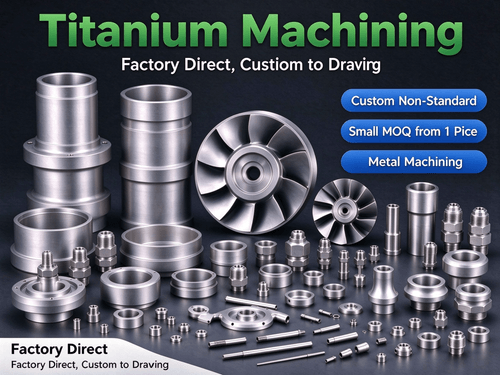
Titanium
Keywords: titanium alloy cnc machining / titanium 5 axis machining
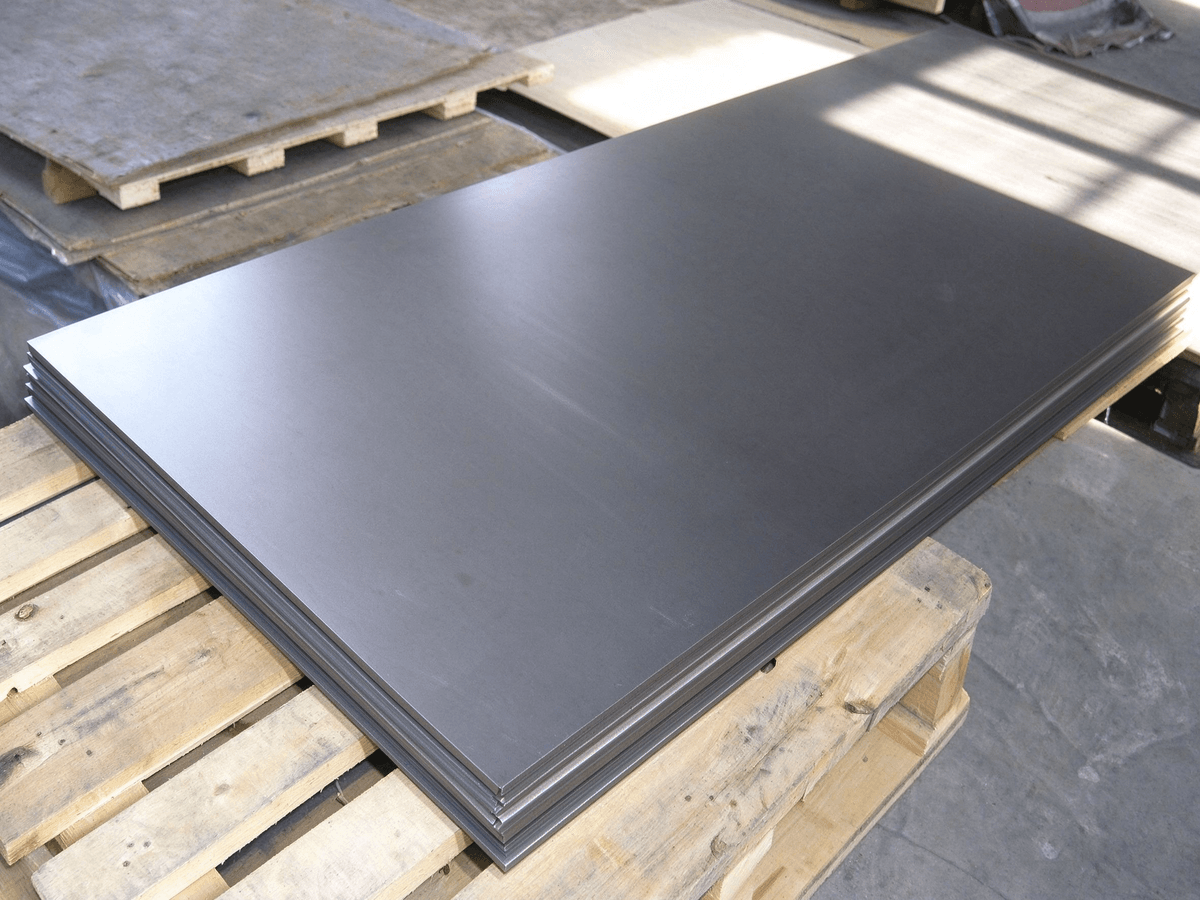
Scene: Stack of matte dark-gray titanium plates on a wooden pallet in the workshop, flat sheet stock with a low-reflection matte surface
Highlights:
- Titanium parts for strength-to-weight and corrosion demand
- Common grades TA2 (Gr.2), TC4 (Gr.5 / Ti-6Al-4V)
- Matte silver-gray, low-reflection surface finish
- Impeller-like curved parts and structural components
- Grade, stock specification and critical geometry reviewed
- Prototype to production, one-off to repeat batches
Why Choose Keying
- Material and specification checked to drawing — grade, stock and critical geometry defined
- Tool engagement, heat control and slender-section support managed
- Matte surface and dimensional stability preserved
- Consistent from prototype to production; requirements carried into repeat batches
Surface Finishes
- Matte natural finish, as-machined; local polishing on request
Production Lead Times
- Urgent prototype — scheduled after geometry, material and schedule review
- Small batch — setups, finishing and agreed inspection coordinated
- Production run — confirmed quantity, repeat checks and production schedule
Lead time is confirmed with the quote based on part, material, quantity, finish and inspection requirements.
FAQ
Q: Which titanium grades are common, and what should be noted?
A: Common grades are TA2 (Gr.2) and TC4 (Gr.5 / Ti-6Al-4V); other grades can be reviewed to drawing. Tool engagement and cutting heat must be controlled, with support for slender sections. Specify grade, stock specification and critical geometry, plus surface requirements where needed.
Q: What should I send for a quotation?
A: Your 3D model and latest 2D drawing, with material and condition, quantities, finishes, critical tolerances and required delivery date; include any inspection or documentation requirements and the delivery destination.
Q: Can you make a prototype before a larger order?
A: Yes. Send the prototype quantity and expected follow-on quantities together; we review the initial part and the requirements to carry into repeat production.
Q: How are tolerances held?
A: Tolerances are held to the drawing requirements, subject to drawing and material review. Position, profile, form and surface roughness each need their own requirements on the drawing.
Q: How soon can production be completed?
A: Urgent prototypes, small batches and production runs are all accommodated; lead time is confirmed with the quote based on part, material, quantity, finish and inspection requirements.
Q: What inspection records can I request?
A: Tell us which features must be reported, and whether you need material documentation, dimensional results or a first-article format. Agree the available records, measurement methods and sampling before ordering.