



Complex Part Machining
Keywords: complex part cnc machining / thin wall / deep cavity
Scene: Thin-wall parts plus deep-cavity housing, caliper as scale reference
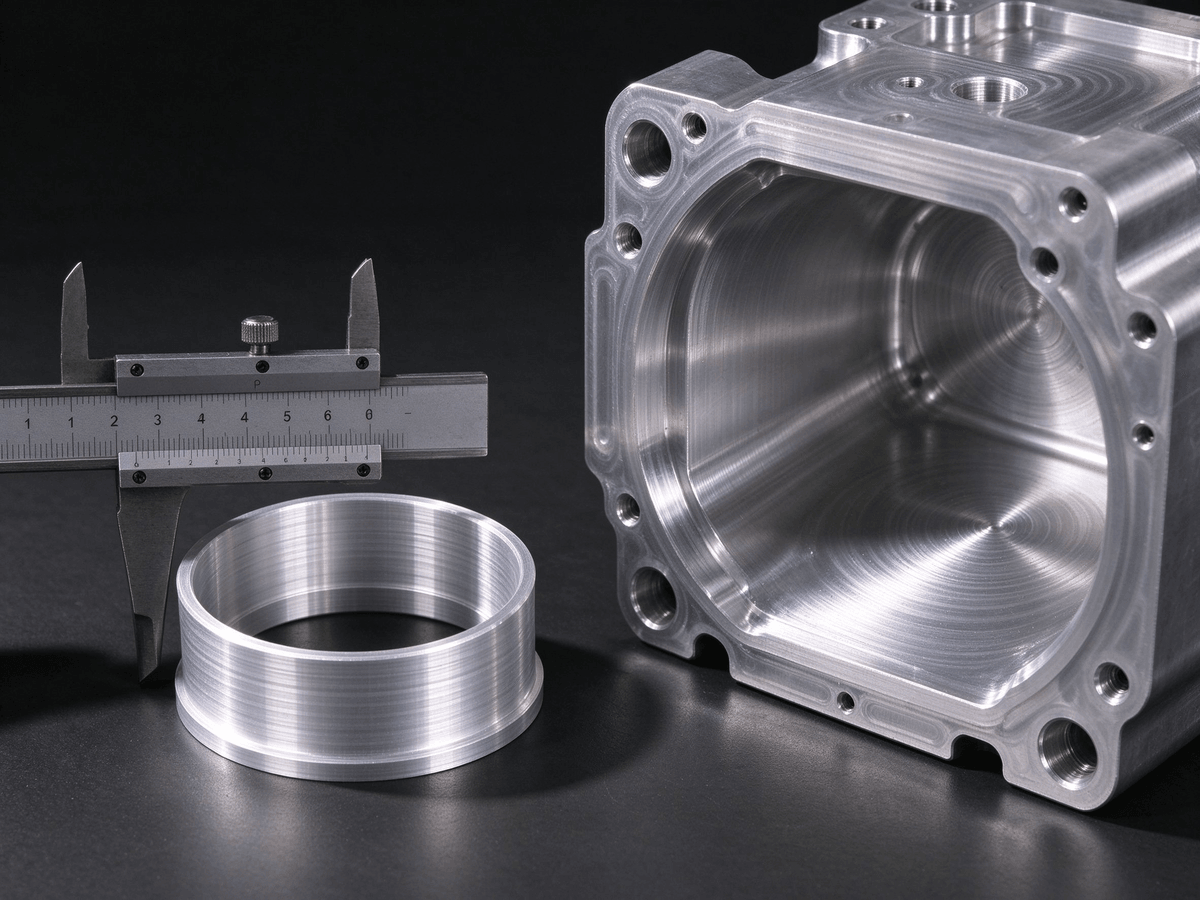
Highlights:
- Thin-wall housings, deep cavities and sculpted parts
- Clamping and support plan for slender or flexible features
- Distortion and spring-back considered in the machining route
- Prototype to production, one-off to repeat batches
- Critical dimensions and datum system agreed before cutting
Why Choose Keying
- Thin-wall, deep-cavity and curved parts machined under a controlled process
- Clamping, support and stock-removal sequence planned for delicate sections
- Distortion and spring-back controlled; critical sections inspected in finished condition
- Critical dimensions and datum system agreed before cutting
Materials We Machine
- Aluminum: 6061-T6, 7075-T6, 5052, 2024, 6082, etc.
- Stainless steel: 304, 316/316L, 416, 420, 17-4PH, etc.
- Titanium: TA2 (Gr.2), TC4 (Gr.5), etc.
- Alloy and tool steels: 4140/42CrMo, 4340, D2, H13, etc.
- Brass and copper: H62, C36000, T2/C11000, etc.
Other grades, castings or supplied blanks are reviewed on request — send the specification and model for a feasibility check.
Surface Finishes
- As-machined finish; local finish machining
- Anodizing (aluminum); bead blasting before anodizing where appropriate
- Passivation (stainless steel)
- Black oxide or coating (carbon steel)
- Polishing or brushing (copper / stainless parts)
- Local polishing or a defined cosmetic texture for visible faces
Production Lead Times
- Urgent prototype — scheduled after geometry, material and schedule review
- Small batch — setups, finishing and agreed inspection coordinated
- Production run — confirmed quantity, repeat checks and production schedule
Lead time is confirmed with the quote based on part, material, quantity, finish and inspection requirements.
FAQ
Q: How is distortion controlled on thin-wall and deep-cavity parts?
A: We reduce distortion through staged stock removal, proper support, controlled clamping and process order; critical thin sections are inspected in the finished condition.
Q: What should I send for a quotation?
A: Your 3D model and latest 2D drawing, with material and condition, quantities, finishes, critical tolerances and required delivery date; include any inspection or documentation requirements and the delivery destination.
Q: Can you make a prototype before a larger order?
A: Yes. Send the prototype quantity and expected follow-on quantities together; we review the initial part and the requirements to carry into repeat production.
Q: How are tolerances held?
A: Tolerances are held to the drawing requirements, subject to drawing and material review. Position, profile, form and surface roughness each need their own requirements on the drawing.
Q: How soon can production be completed?
A: Urgent prototypes, small batches and production runs are all accommodated; lead time is confirmed with the quote based on part, material, quantity, finish and inspection requirements.
Q: What inspection records can I request?
A: Tell us which features must be reported, and whether you need material documentation, dimensional results or a first-article format. Agree the available records, measurement methods and sampling before ordering.