



Aluminum
Keywords: custom aluminum cnc machining / anodized aluminum
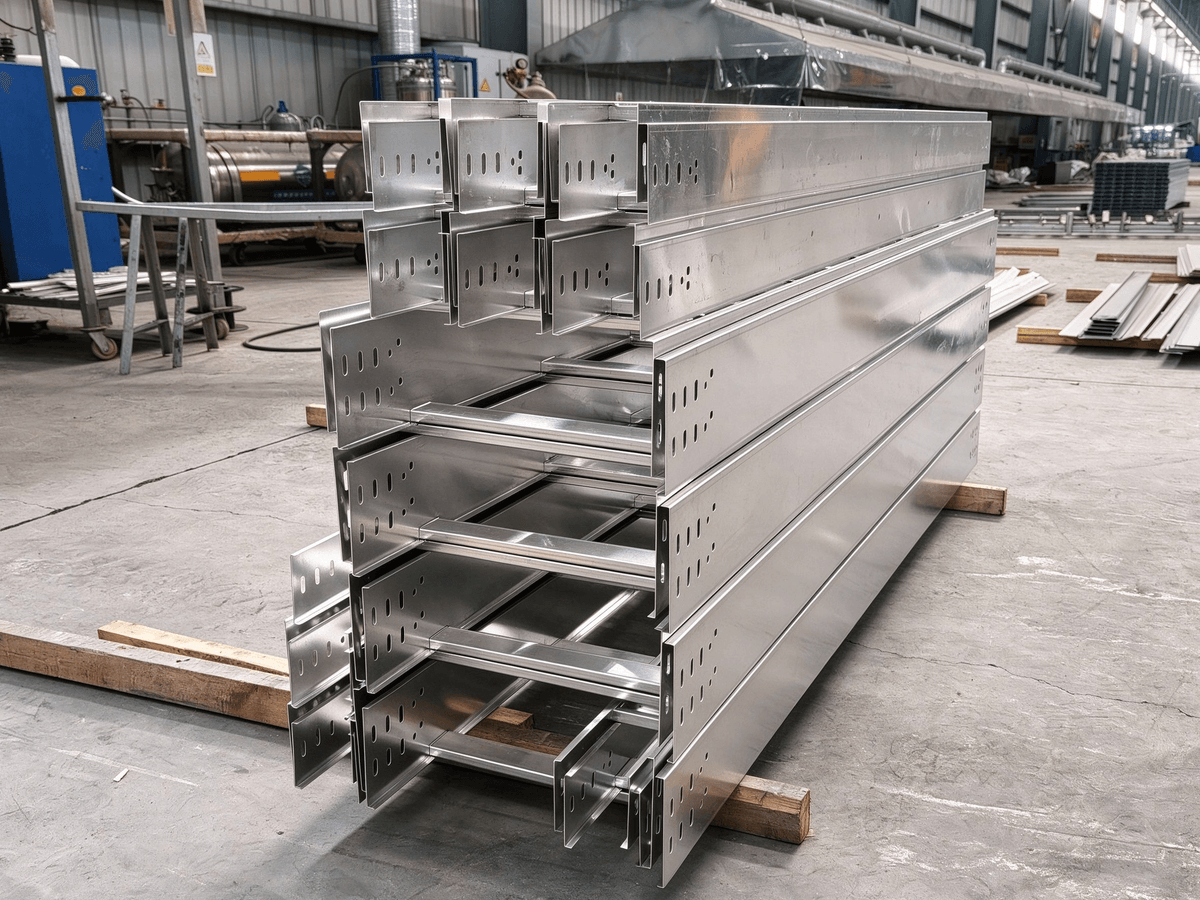
Scene: Rows of long silver metal cable-tray / channel structural sections stacked on wooden skids in a workshop, slotted side walls with round and oblong holes
Highlights:
- Aluminum housings, brackets, frames and machined plates
- Common grades 6061-T6, 7075-T6, 5052, 2024, 6082
- Anodizing, bead blasting and as-machined finish options
- Lightweight moving and structural components
- Alloy and temper specified against the service condition
- Prototype to production, one-off to repeat batches
Why Choose Keying
- Material and specification checked to drawing — alloy grade, condition and critical geometry defined
- Experience in lightweight aluminum machining, balancing thin walls and structural features
- Anodizing, bead blasting and other finishes matched to use
- Consistent from prototype to production; requirements carried into repeat batches
Surface Finishes
- Anodizing (silver/black), bead blasting, as-machined finish
- Local polishing where required
Production Lead Times
- Urgent prototype — scheduled after geometry, material and schedule review
- Small batch — setups, finishing and agreed inspection coordinated
- Production run — confirmed quantity, repeat checks and production schedule
Lead time is confirmed with the quote based on part, material, quantity, finish and inspection requirements.
FAQ
Q: What parts suit aluminum, and which grades are common?
A: Lightweight housings, brackets, frames and moving structural parts. Common grades are 6061-T6, 7075-T6, 5052, 2024 and 6082; other grades can be reviewed to drawing. Specify alloy, temper and any anodizing or bead-blast requirement.
Q: What should I send for a quotation?
A: Your 3D model and latest 2D drawing, with material and condition, quantities, finishes, critical tolerances and required delivery date; include any inspection or documentation requirements and the delivery destination.
Q: Can you make a prototype before a larger order?
A: Yes. Send the prototype quantity and expected follow-on quantities together; we review the initial part and the requirements to carry into repeat production.
Q: How are tolerances held?
A: Tolerances are held to the drawing requirements, subject to drawing and material review. Position, profile, form and surface roughness each need their own requirements on the drawing.
Q: How soon can production be completed?
A: Urgent prototypes, small batches and production runs are all accommodated; lead time is confirmed with the quote based on part, material, quantity, finish and inspection requirements.
Q: What inspection records can I request?
A: Tell us which features must be reported, and whether you need material documentation, dimensional results or a first-article format. Agree the available records, measurement methods and sampling before ordering.